
The Alpha Myth: Blood Type O Meets the Five Phases
If you have ever fallen down the rabbit hole of East Asian pop-psychology, you already know the gospel of Blood Type O. In Tokyo cafes, Seoul blind dates, and corporate breakrooms alike, Type O is crowned the apex predator of social dynamics: the confident, outspoken pioneer who marches into chaos, rallies the troops, and casually shoulders what would crush anyone else. While modern healthcare institutions note that empirical science views blood group personality traits as cultural mythology, the archetypal pull is irresistible. It answers a visceral question: Why do some people naturally step into the fire while others run for the exits?
Western horoscopes might file this under an Aries fire-starter or an ENTJ field marshal. But if you transport that same raw, decisive momentum into Chinese metaphysics—specifically the structural architecture of BaZi (Four Pillars of Destiny)—a fascinating split appears.
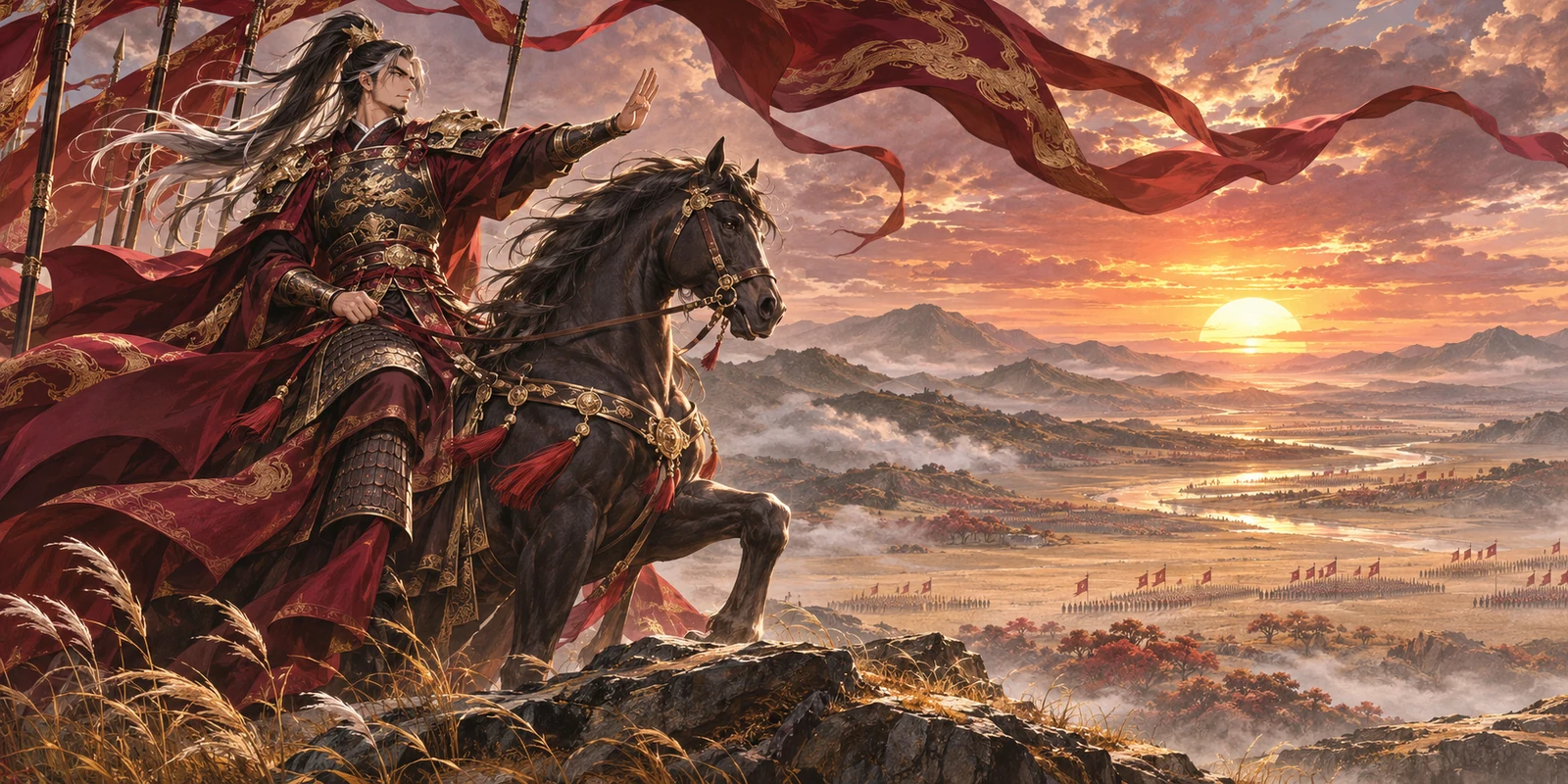
In BaZi, human potential is not a static label stamped onto your red blood cells. It is a dynamic, high-stakes thermodynamic game of Five Phases (Wu Xing), mapped through the traditional cyclical calendar of Heavenly Stems and Earthly Branches. The universe does not simply designate you a "leader." It asks a much more brutal structural question: Are you built to lead from the saddle with a drawn sword, or are you the invisible kingmaker whose seal of office moves armies without ever swinging a blade?
In classical destiny theory, this distinction boils down to two legendary configurations dealing with ultimate pressure: Yangren Jiasha (阳刃驾杀, Yang Blade Controlling Seven Killings) and Shayin Xiangsheng (杀印相生, Seven Killings Generating the Seal).
Before you assume your Type O confidence makes you an untouchable hero, let us look beneath the hood of the chart.
The Engine of Crisis: What Happens When Pressure Peaks
To understand both patterns, you must meet the most fearsome entity in the BaZi pantheon: the Seven Killings (Qi Sha, 七杀).
In the matrix of Ten Gods, Seven Killings represents the element that directly attacks your Day Master (the core celestial stem representing your self) with identical polarity (Yang against Yang, or Yin against Yin). Unlike the disciplined, benevolent structure of the Direct Officer (Zheng Guan), Seven Killings is raw, asymmetrical aggression. It is the hostile corporate takeover, the sudden health collapse, the unexpected frontline skirmish, or the high-stakes risk that threatens your absolute ruin.
Most charts buckle under pure Seven Killings. They experience chronic burnout, overwhelming anxiety, or structural defeat. But in extraordinary charts, this lethal pressure is not avoided—it is harnessed. How your chart metabolizes that threat determines whether you become the General or the Kingmaker.
| Attribute | Yangren Jiasha (The General) | Shayin Xiangsheng (The Kingmaker) |
|---|---|---|
| Core Dynamic | Blade clashes against Killings; force meets force | Killings feeds Seal; pressure is transmuted into authority |
| Operating Style | Frontline, physical, combative, uncompromising | Institutional, strategic, doctrinal, bureaucratic |
| Ten Gods Involved | Day Master + Yang Blade (Rob Wealth) + Seven Killings | Seven Killings + Direct/Indirect Seal + Day Master |
| Relationship to Danger | Confronts and subjugates crisis head-on | Absorbs danger and re-engineers it as leverage |
| Shadow Side | Impulsive volatility, physical exhaustion, catastrophic friction | Detached cynicism, ideological rigidity, decision paralysis |
| Modern Corporate Role | Crisis turnaround CEO, combat litigator, solo founder | Executive board chair, institutional policymaker, master strategist |
Swipe to compare →
Pattern One: Yangren Jiasha — The Sword in the Arena
Classical texts like the Zi Ping Zhen Quan treat the Yang Blade (Yangren, 阳刃) with extreme respect and profound caution. The Blade represents the zenith of your Day Master's element—a point of physical density so concentrated that it cuts both outward and inward. For a Yang Day Master, it is the ultimate reservoir of stamina, stubborn defiance, and relentless ego.
By itself, an unbridled Yang Blade is merely a wrecking ball. It breeds arrogant brawlers, individuals who burn through partnerships and break themselves against authority. But when a ferocious Yang Blade meets an equally ruthless Seven Killings, a miraculous synthesis occurs: Yangren Jiasha (The Blade Rides the Killings).
Think of it as the forge. Seven Killings is the raging fire; the Yang Blade is the dense iron. Without the fire, the iron remains blunt and crude. Without the iron, the fire simply burns down the village.
When these two titans lock into balance:
- The Seven Killings provides an urgent mission, external discipline, and genuine stakes.
- The Yang Blade provides the fearless physical vessel, unyielding grit, and stomach for conflict.
This is the classic frontline commander. People with this energy don't delegate crisis; they step directly into the blast radius. If a server farm melts down at midnight, they do not write a committee memo—they grab a terminal and rewrite the failing scripts themselves. They possess the quintessential "Type O warrior spirit," but codified through elemental tension: they command respect because they bear the deepest scars.
Pattern Two: Shayin Xiangsheng — The Throne Behind the Curtain
Now observe the alternative response to crisis: Shayin Xiangsheng. Here, there is no direct collision. The chart does not send a soldier with a blade to duel the assassin; it rewires the entire battlefield.
In classical Five Phase philosophy, as mapped by philosophical analyses of Wu Xing interactions, an element that attacks you can be diverted. Between the attacking element (Seven Killings) and the receiving self (Day Master) sits the Seal (Yin, 印星)—representing intellect, institutional credibility, cultural capital, philosophy, and strategic endurance.
Consider the generative cycle:
- Metal generates Water;
- Water generates Wood.
If you are a Wood Day Master facing the lethal assault of Metal (Seven Killings), introducing Water (the Seal) completely alters the reality. Metal no longer attacks Wood directly; it is forced to pour its power into Water, which in turn nourishes Wood. The fatal assault becomes a massive infusion of life force.
This is the Kingmaker. Individuals operating under Shayin Xiangsheng possess a chilling, elegant composure under fire. Where the frontline warrior swings back, the master of the Seal pauses, categorizes the crisis, drafts the doctrine, and absorbs the enemy's momentum into systemic power.
They do not need to raise their voices. They don't have to break bones. They operate through policy, authority, intellectual frameworks, and structural mandate. While the General takes the arrows on the ramparts, the Kingmaker sits in the war room, adjusting the maps and drafting the treaty that determines who wears the crown.
Deconstructing a Legend: Bruce Lee’s Matrix of Fire and Steel
To see how structural pressure shapes an undeniable legacy, examine the chart of an icon who revolutionized global physical culture: Bruce Lee.
According to verified public vital records cataloged by Astro-Databank's birth data archives, Bruce Lee was born on November 27, 1940, in San Francisco, California. His first three pillars form a breathtaking dynamic:
- Year Pillar: Geng Chen (庚辰)
- Month Pillar: Ding Hai (丁亥)
- Day Pillar: Jia Xu (甲戌)
   Year        Month         Day
 [庚  Geng]   [丁  Ding]   [甲  Jia]     <-- Heavenly Stems
 [辰  Chen]   [亥  Hai ]   [戌  Xu ]     <-- Earthly Branches
Look at this configuration through the lens of Ten Gods and Five Phases:
- The Day Master: Bruce Lee is Jia Wood (甲木)—a mighty, upright Yang tree rooted in dry earth (Xu, 戌), striving toward the light.
- The Looming Menace (Seven Killings): Sitting high on the Year Stem is Geng Metal (庚金). Geng is the heavy axe, the razor-sharp sword, the pure embodiment of Seven Killings attacking Jia Wood directly. From the moment he entered the world, his structure was defined by lethal confrontation, physical testing, and high-stakes combat.
- The Pivot of Expression (Hurting Officer): Right between the aggressive Geng Metal and his Jia Wood Day Master sits Ding Fire (丁火) on the Month Stem. In BaZi, Ding Fire produced by Jia Wood is the Hurting Officer (Shang Guan). Fire melts and shapes Metal. Ding Fire is the torch of radical creativity, theatrical brilliance, and non-conformist rebellion.
- The Deep Reservoir (The Seal): Underneath, in the Month Branch of Hai Water (亥水), resides Lee's primary Qi: Ren Water (壬水), his Indirect Seal (Pian Yin). Water nourishes Wood and cools Fire.
Lee did not merely punch through walls; he fundamentally reorganized martial arts into a living philosophy. As documented by the Bruce Lee official legacy archives on Jeet Kune Do, his ultimate creation was not a rigid, traditional school of combat, but a fluid, conceptual philosophy: "Using no way as way; having no limitation as limitation."
Notice how the traditional stems play out: The crushing pressure of the Geng Metal Seven Killings demanded supreme discipline. Rather than letting it destroy him, his Ding Fire Hurting Officer expressed it through dynamic martial artistry, while the Hai Water Seal provided the philosophical depth that turned physical combat into timeless literature and film. He walked the path where extreme physical confrontation transformed into enduring systemic thought.
The Friday 6:00 PM Test: Which Commander Are You?
Forget ancient battlefield banners for a moment. How does this structural split manifest in your everyday modern career?
Picture a high-stakes emergency: It is 5:45 PM on a Friday. A flagship enterprise client discovers a catastrophic data discrepancy. The renewal contract worth millions is scheduled for Monday morning, and the team is descending into blind panic.
The Yangren Jiasha Response:
You feel an immediate surge of adrenaline. You do not want a strategy sync; you want the raw inputs. You pull a double espresso, cancel your weekend plans, demand direct access to the database, and spend the next fourteen hours manually hunting down the corrupt records line by line. By Sunday dawn, your eyes are bloodshot, your hands are shaking, but the system is clean. You drop the fixed files onto the client’s desk with a flat, fierce smile. You conquered the dragon with your own bare hands.
The Shayin Xiangsheng Response:
You remain completely still while everyone else is hyperventilating. You don't open the terminal. Instead, you quickly assess the root cause: Is this an engineering flaw or a communication breakdown? You pull the three specific leads who actually hold the domain knowledge, reallocate emergency weekend resources, draft a clear executive mitigation memorandum, and coordinate an emergency audit framework. By Saturday afternoon, the process is contained, the client has signed an addendum acknowledging the mitigation, and the team is operating under clear protocols. You did not write a single line of repair code, yet without your seal of authority, the entire enterprise would have collapsed.
Both archetypes successfully save the day. Both are natural leaders. But their internal machinery could not be more different.
What Does Your Own Engine Demand?
If you have always identified with the fierce, independent, action-oriented traits of Blood Type O or bold fire-sign placements, you already know the drive inside you. But until you examine your own BaZi chart, you are driving a high-performance machine without reading the technical blueprint.
- Are you constantly running yourself into physical collapse because your chart actually calls for the scholarly, transmuting power of the Seal rather than a frontline duel?
- Or are you feeling suffocated in an overly bureaucratic, endless committee room because your Day Master carries a razor-sharp Yang Blade that is begging for a real, high-stakes battle to conquer?
You do not need to guess your cosmic design based on a generalized blood bag or a twelve-sign horoscope.
Take your exact birth date and hour to the FateWay Workbench. Once your pillars are calculated, bypass the generic summaries and take your chart directly into Chat. Ask specific, penetrating questions:
"Where does Seven Killings appear in my chart, and do I have the Blade or the Seal to control it?"
"Am I structured to be the visible frontline operator or the strategic architect behind the scenes?"
Stop wondering why some challenges fire you up while others drain your soul. Uncover the raw elemental engine you were born with—and learn whether your destiny is to wield the blade or rule the throne.